
As the chilly breeze whispers through my kitchen window, I find myself dreaming of flavors that warm both the heart and the soul. Enter Kimchi Jjigae, the ultimate comfort food that brings a delightful explosion of salty, savory, and smoky notes to the table. This comforting vegetarian kimchi jjigae is not just a quick solution for weeknight dinners, taking only 35 minutes from start to finish, but it’s also a health-conscious gem loaded with probiotics and plant power. Whether you’re serving it steaming hot alongside fluffy rice or as part of a festive spread, this dish is designed to please every palate. So, are you ready to dive into a bowl of pure, soul-warming bliss? Let’s get cooking!
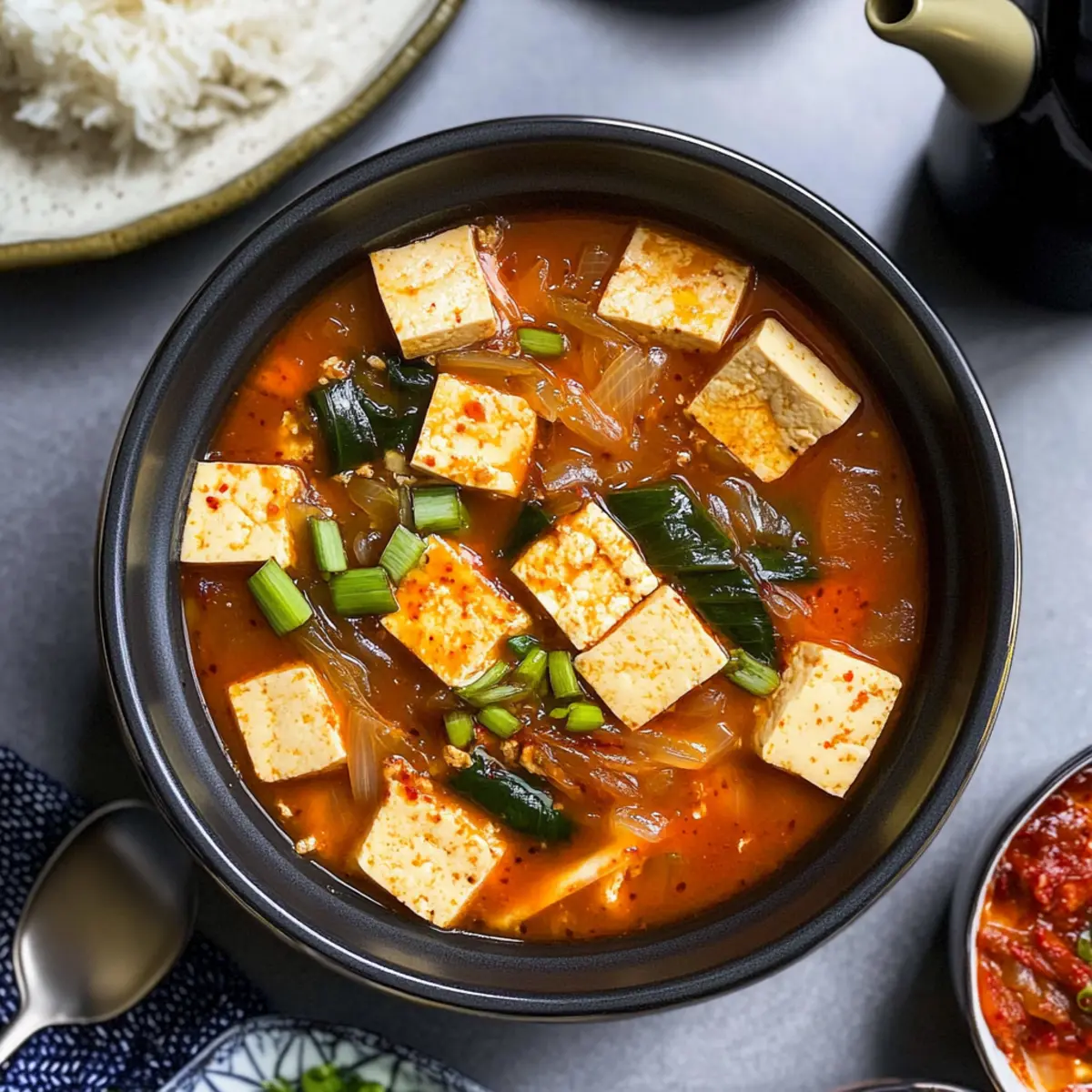
Why is Kimchi Jjigae a Must-Try?
Comforting warmth: This kimchi jjigae stews all your worries away, making it a perfect choice for cold evenings. Flavor-packed goodness: The tangy kimchi and savory tofu meld beautifully for a rich, satisfying experience. Quick and easy: Ready in just 35 minutes, it’s ideal for busy weeknights. Customizable delights: Whether vegetarian or meaty, you can adapt it to suit every taste. Plus, it pairs wonderfully with banchan or your favorite side dishes, ensuring a crowd-pleasing meal every time!
Kimchi Jjigae Ingredients
• Dive into the delightful world of Kimchi Jjigae with these essential ingredients!
For the Stew
- Vegetable Oil or Grapeseed Oil – Adds richness; substitute with any neutral oil for versatility.
- Kimchi (2 cups) – Provides the stew’s signature tangy, spicy flavor; opt for well-fermented kimchi for the best results.
- Onion (1 small, finely sliced) – Adds sweetness and depth to the stew.
- Garlic (2 cloves, minced) – Enhances the aroma and overall flavor profile.
- Water (4 cups) – Base liquid for the stew; using vegetable stock will elevate the flavor further.
- Kimchi Juice (1/4 cup) – Intensifies the kimchi flavor; a splash of vinegar works in a pinch.
- Gochugaru (2 teaspoons) – Korean red pepper flakes that provide heat; adjust to your spice tolerance.
- Gochujang (1 teaspoon) – Adds umami and complexity; omit for a milder stew if preferred.
- Soy Sauce (1/2 tablespoon) – Delivers saltiness and depth; use tamari for a gluten-free option.
- Firm Tofu (12 to 14 ounces, drained and cut into bite-size pieces) – Serves as the main protein source, adding creaminess.
- Green Onions (finely chopped) – Fresh garnish that adds a vibrant color and a bite.
- Salt – To taste, adjust according to your dietary needs.
Optional Additions
- Vegetables (like zucchini or mushrooms) – For a heartier stew, integrate your favorites!
- Protein Options (like chicken or pork) – Add for a non-vegetarian twist to make it your own.
Step‑by‑Step Instructions for Comforting Vegetarian Kimchi Jjigae
Step 1: Sauté the Base
In a medium pot, heat 2 tablespoons of vegetable oil over medium-high heat. Add 2 cups of well-fermented kimchi, 1 finely sliced onion, and 2 minced garlic cloves. Stir-fry for about 5-7 minutes until the onion becomes translucent and soft, allowing the kimchi to release its delicious aroma and flavors into the oil.
Step 2: Add Liquid and Seasonings
Pour in 4 cups of water and 1/4 cup of kimchi juice into the pot, bringing the mixture to a boil. Then, add 2 teaspoons of gochugaru, 1 teaspoon of gochujang, and 1/2 tablespoon of soy sauce to enhance the savory profile of your kimchi jjigae. As it boils, take a moment to enjoy the burgeoning scent that fills your kitchen.
Step 3: Introduce Tofu
Carefully add 12 to 14 ounces of drained, bite-sized firm tofu pieces into the bubbling broth. Bring everything back to a boil, allowing the tofu to soak up the rich flavors from the kimchi and spices. Once boiling, reduce the heat to a gentle simmer, cover the pot, and let it cook for about 15 minutes to meld all the delicious notes together.
Step 4: Final Touches
After simmering, turn off the heat, and stir in a handful of finely chopped green onions for a burst of freshness. Taste your comforting vegetarian kimchi jjigae, adjusting the salt to suit your preference. If desired, you can also add a splash of rice vinegar for a touch of acidity to enhance the flavors further.
Step 5: Serve and Enjoy
Ladle your comforting kimchi jjigae into deep bowls, serving it steaming hot alongside fluffy steamed rice for a wholesome meal. This delightful stew not only warms you from the inside out but also showcases the wonderful combination of tangy, savory, and spicy flavors, making it a cherished dish for any occasion.
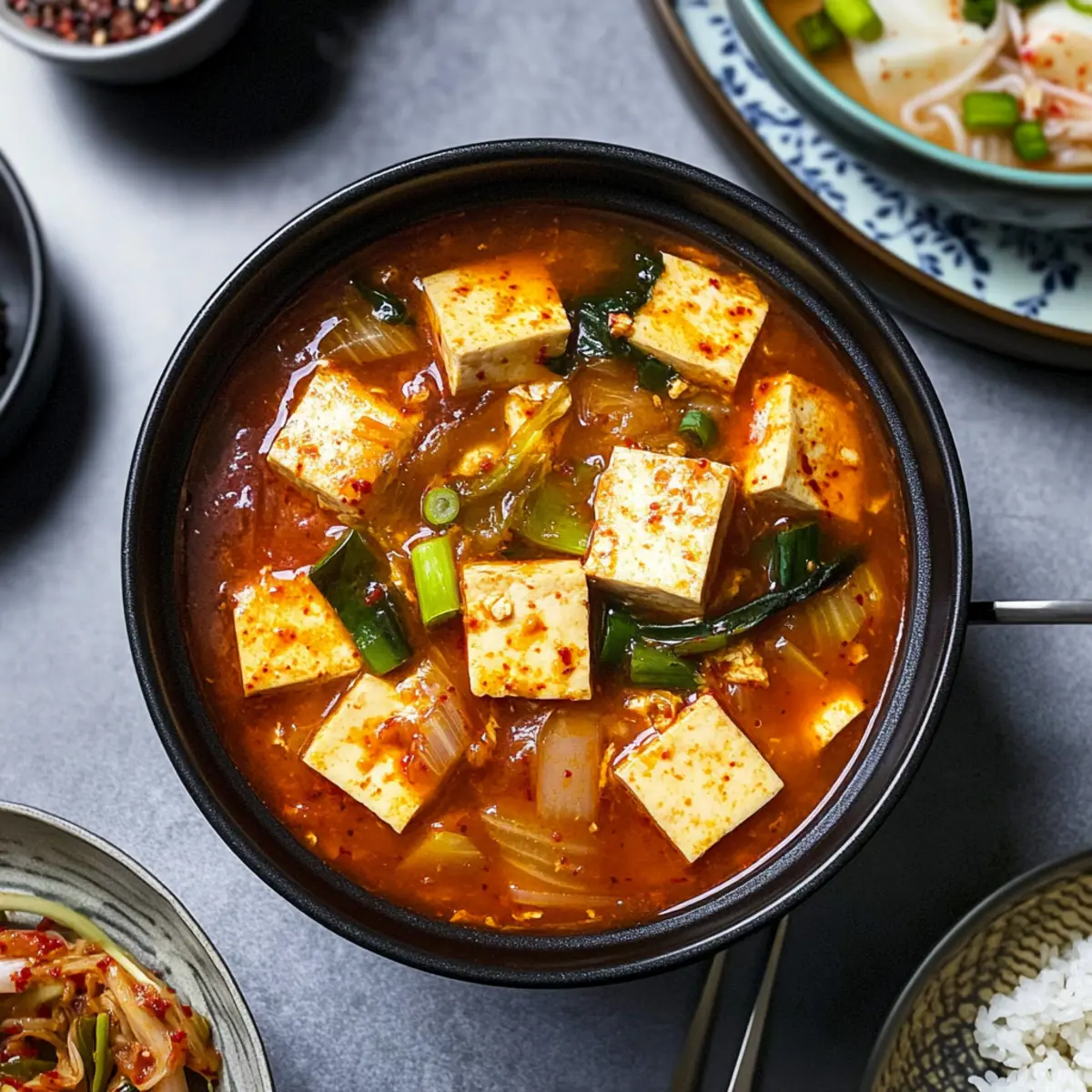
What to Serve with Kimchi Jjigae?
Experience the culinary delight of complementing your kimchi jjigae with these carefully selected dishes that enhance its rich flavors.
- Steamed Rice: A classic side that balances the stew’s spiciness and absorbs its savory broth, making each bite truly satisfying.
- Korean Banchan: These delightful small side dishes, like pickled radishes or sautéed greens, offer a fresh, crunchy contrast to the comforting warmth of the stew.
- Sweet Gochujang Sauce: Drizzle this sweet-spicy condiment over rice or vegetables for a flavor burst that complements the stew’s heat beautifully.
- Vegetable Pancakes: Crispy, savory pancakes made with mixed veggies provide a delightful textural contrast and elevate the whole meal experience.
- Kimchi Fried Rice: Turn leftovers into a delicious fried rice dish infused with kimchi’s flavor for a delectable twist that brings leftovers to life.
- Cucumber Salad: A refreshing salad with a light vinaigrette adds a cool, crunchy palate cleanser between each warm, hearty spoonful of stewed goodness.
- Barley Tea: Sip on this nutty, slightly sweet beverage as you enjoy your meal; it complements the bold flavors and aids digestion.
Each pairing enhances the comforting essence of kimchi jjigae, transforming your meal into a feast that warms both body and soul!
How to Store and Freeze Kimchi Jjigae
Fridge: Store cooled kimchi jjigae in an airtight container for up to 4 days. Make sure it’s cooled before sealing to maintain freshness.
Freezer: For longer storage, freeze the kimchi jjigae in portions. Be sure to remove the tofu beforehand, as it can become spongy when frozen; add fresh tofu when reheating.
Reheating: Reheat gently on the stovetop over low heat, adding a splash of water or vegetable broth if necessary. Stir occasionally for even warming, ensuring a comforting bowl every time.
Make Ahead Options
These delightful bowls of Kimchi Jjigae are perfect for meal prep enthusiasts! You can chop the vegetables (onion and garlic) and store them in the refrigerator for up to 3 days. Additionally, you can prepare the kimchi stew base (kimchi, water, kimchi juice, and seasonings) in advance and refrigerate it for up to 24 hours before cooking. When you’re ready to serve, simply heat the stew base in a pot, add the tofu, and bring it to a gentle simmer until heated through, which takes about 10 minutes. This approach not only saves time but also ensures that your Kimchi Jjigae remains just as delicious and comforting!
Expert Tips for Kimchi Jjigae
• Quality Kimchi: Use well-aged, flavorful kimchi for the best taste. Fresh kimchi may lack the depth needed for a rich broth.
• Spice Adjustments: Start with less gochugaru to control the heat, then gradually increase as needed. A little can go a long way!
• Liquid Choices: Swap water for vegetable stock to enhance the umami flavor of your kimchi jjigae. Stock adds depth that complements the spices beautifully.
• Tofu Variations: If you’re not keen on tofu, try tempeh for a nuttier flavor or add cooked chicken for a heartier touch.
• Storage Savvy: Refrigerate leftovers in an airtight container for up to 4 days. For freezing, remove tofu before freezing, and add fresh tofu when reheating for the best texture.
Kimchi Jjigae Variations & Substitutions
Feel free to personalize your kimchi jjigae adventure with these delightful twists and substitutions, enhancing the experience of this beloved stew.
- Protein Swap: Substitute firm tofu with tempeh for a nuttier flavor and extra protein boost.
- Vegan Option: Ensure your kimchi is vegan-friendly and use vegetable stock for a completely plant-based dish that’s full of flavor.
- Meaty Delight: Integrate tender chicken or juicy pork for a heartier, non-vegetarian spin on this classic stew.
- Zesty Kick: Add a tablespoon of plain rice vinegar for an extra layer of tanginess that complements the kimchi beautifully.
- Hearty Veggies: Throw in diced zucchini or mushrooms for a richer texture and added nutrients; they cook down wonderfully in the stew!
- Gluten-Free Choice: Use tamari instead of soy sauce to keep your kimchi jjigae gluten-free without sacrificing taste.
- Spice Level Control: Adjust the heat by starting with less gochugaru and adding more according to your preference; spice it up gradually!
- Sour Notes: For a more robust sour profile, add a splash of lemon juice or a bit more kimchi juice just before serving.
Remember, the beauty of kimchi jjigae lies in its versatility! You can enjoy various flavors and textures, ensuring that each bowl is a comforting hug in a dish. Looking for other delightful ideas? Explore Serving Suggestions or dive into ways to Customize Your Recipe to delight every palate at your table!
Kimchi Jjigae Recipe FAQs
How do I select the right kimchi for my jjigae?
Absolutely! For the best flavor, opt for well-fermented kimchi. Look for a vibrant color and complex aroma, avoiding kimchi that has dark spots all over, which may indicate spoilage. You want that perfect balance of tangy and spicy!
What’s the best way to store leftover kimchi jjigae?
You can easily store your cooled kimchi jjigae in an airtight container in the fridge for up to 4 days. Make sure it has cooled completely before sealing it up to maintain its deliciousness. This stew only gets better the longer the flavors meld together!
Can I freeze kimchi jjigae, and if so, how?
Very! To freeze your kimchi jjigae, remove the tofu before placing the stew in portions into freezer-safe containers. You can freeze it for up to 3 months. When you’re ready to enjoy, defrost in the fridge overnight, then reheat on low heat, adding fresh tofu to ensure the best texture!
What should I do if the kimchi jjigae is too spicy?
If your jjigae ends up being spicier than you’d like, fear not! You can mitigate the heat by adding a pinch of sugar to balance out the flavors, or a splash of coconut milk for creaminess. Adding more tofu or veggies will also help tone down the spice while enhancing the dish’s heartiness.
Is this recipe suitable for my gluten-free diet?
Absolutely! To make your kimchi jjigae gluten-free, simply use tamari instead of regular soy sauce. Plus, always check the labels on your kimchi to ensure it’s gluten-free, as some brands may contain wheat-based ingredients.
Can my pet enjoy kimchi jjigae?
While kimchi jjigae is delicious for us humans, it’s best to keep it away from pets. The spices, especially garlic and onions, can be harmful to their health. Instead, share some plain cooked tofu or steamed rice with them as a treat!
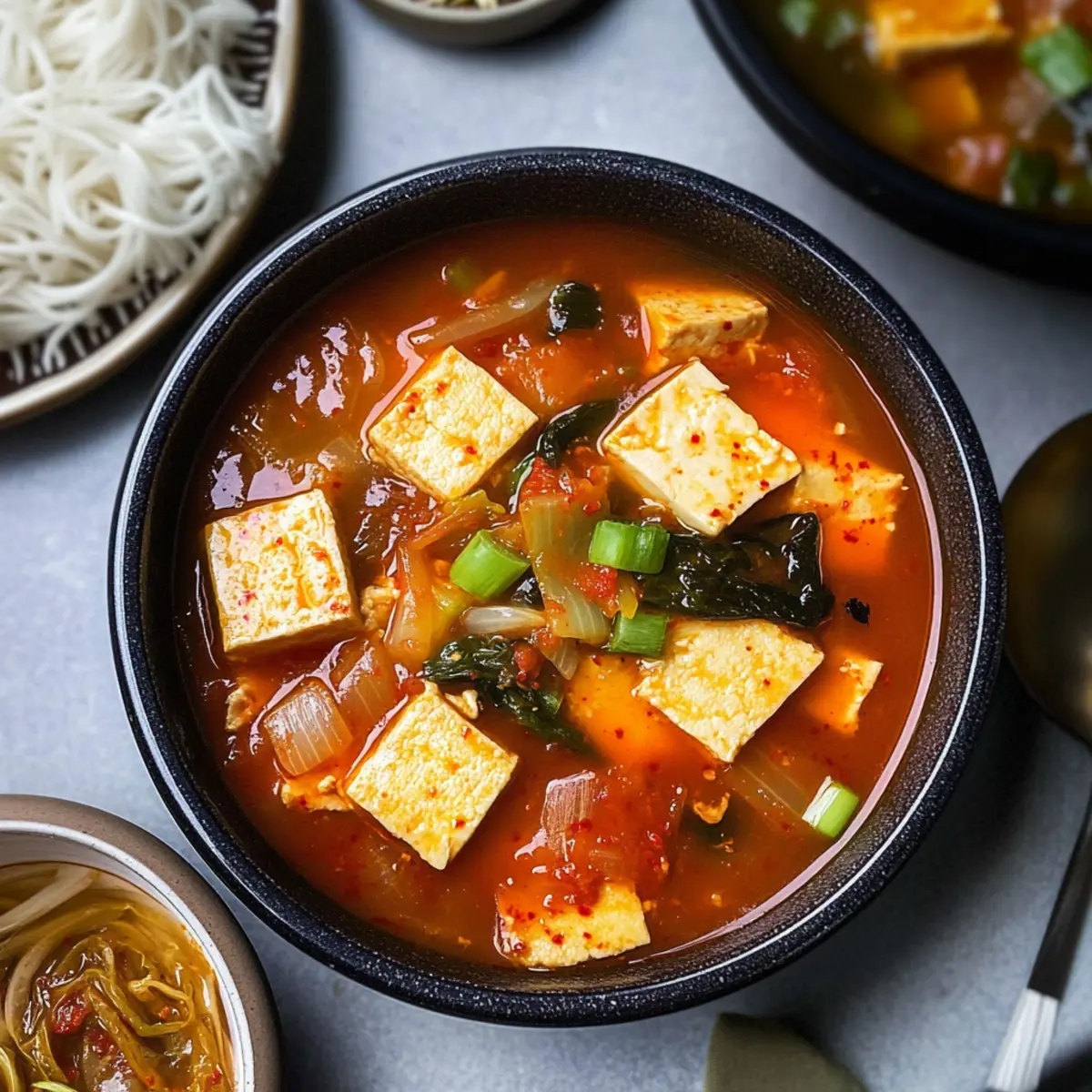
Delicious Kimchi Jjigae: Your Go-To Comfort Food Stew
Ingredients
Equipment
Method
- In a medium pot, heat 2 tablespoons of vegetable oil over medium-high heat. Add 2 cups of well-fermented kimchi, 1 finely sliced onion, and 2 minced garlic cloves. Stir-fry for about 5-7 minutes until the onion is translucent and soft.
- Pour in 4 cups of water and 1/4 cup of kimchi juice, bringing the mixture to a boil. Then, add 2 teaspoons of gochugaru, 1 teaspoon of gochujang, and 1/2 tablespoon of soy sauce.
- Carefully add 12 to 14 ounces of drained, bite-sized firm tofu pieces into the bubbling broth. Allow to cook for about 15 minutes.
- After simmering, turn off the heat, and stir in a handful of finely chopped green onions for freshness. Taste and adjust salt if necessary.
- Ladle your soup into bowls, serving it hot alongside fluffy steamed rice.
Leave a Reply