
As I reached for the vivid, crunchy vegetables at my local market, I couldn’t help but feel excited about the simple magic of Vietnamese Pickled Vegetables. This recipe, featuring the delightful combination of daikon radish and carrots, transforms humble ingredients into zesty jewels that can elevate any meal. Not only is this pickling method quick and easy, perfect for those busy weeknights, but it also adds a burst of flavor and texture to dishes like fragrant bánh mì or warming noodle soups. Plus, the vibrant colors and tangy crunch of these pickled delights are sure to impress even the pickiest eaters at your table. Ready to experience the joy of home-pickling? Let’s dive into this vibrant culinary adventure together!
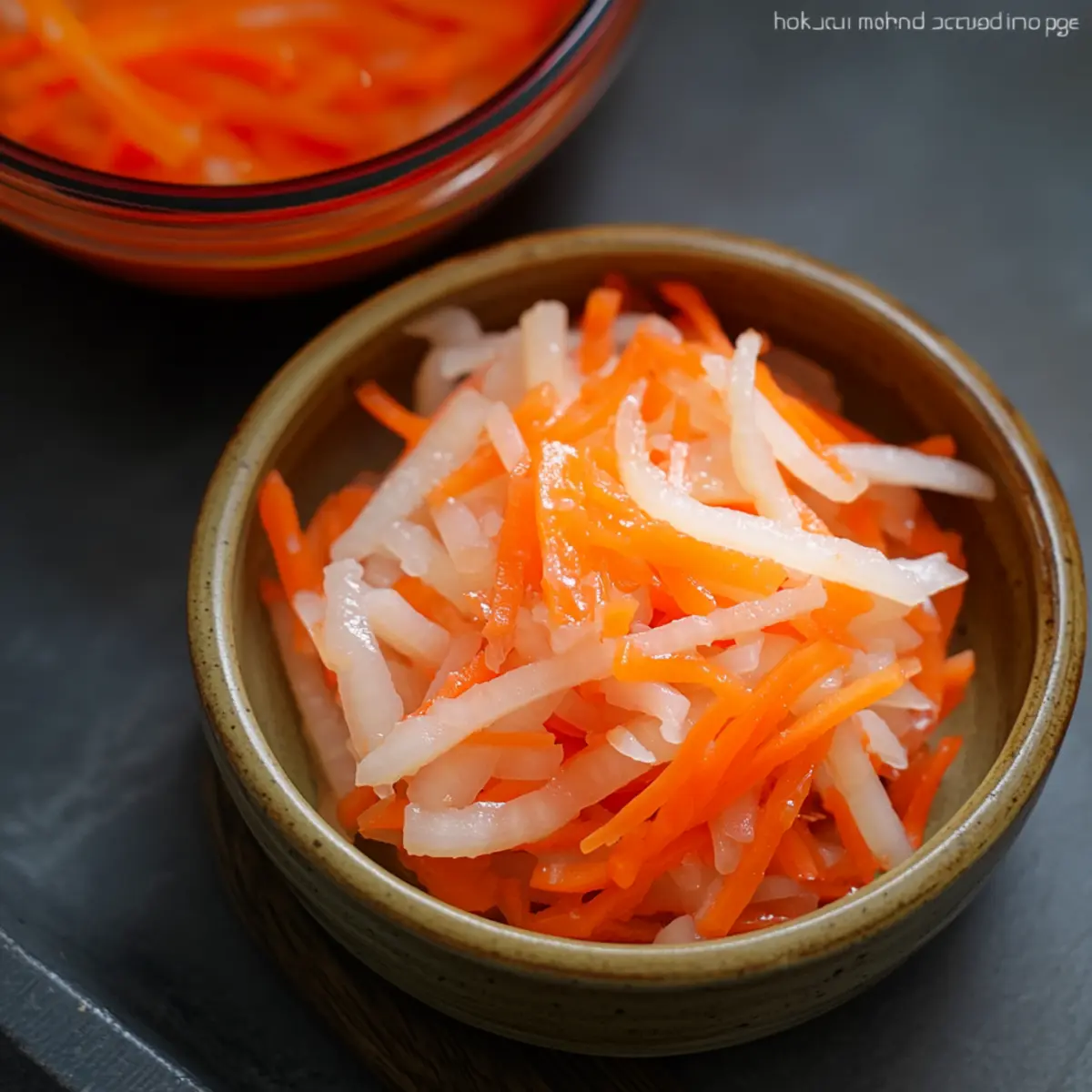
Why Are Vietnamese Pickled Vegetables Irresistible?
Simplicity at its finest: With minimal prep and just a few ingredients, these pickled vegetables can be ready in no time, making them ideal for busy weeknights. Vibrant flavors and textures: A perfect balance of tangy, sweet, and crunchy, they elevate your dishes from humble to extraordinary. Customization is key: Adjust the daikon-to-carrot ratio or experiment with different veggies to suit your taste. Versatile uses: Serve them as a zesty condiment, a side dish, or even in a vibrant salad. Health-conscious: Low in calories yet packed with vitamins, they’re a nutritious addition to any meal while satisfying your cravings for something fresh and exciting. If you’re craving more Asian-inspired flavors, don’t miss out on my guide to quick pickling techniques!
Vietnamese Pickled Vegetable Ingredients
• Discover the key ingredients to create delightful Vietnamese Pickled Vegetables!
For the Pickling Base
- Daikon Radish – Adds a delightful crunch and a peppery punch; remember to peel and slice into matchsticks for uniform pickling.
- Carrot – Provides natural sweetness and a vibrant color; use fresh, peeled carrots, also cut into matchsticks for the best texture.
- Salt – Essential for drawing moisture out of the vegetables, enhancing their crunch; a heaping tablespoon is recommended for this recipe.
For the Pickling Liquid
- Boiling Hot Water – Used to dissolve the sugar, ensuring a smooth brine.
- Cane Sugar – Sweetens the pickling liquid; feel free to adjust the quantity to match your desired sweetness level. Consider coconut sugar for an interesting twist!
- Vinegar – Provides acidity necessary for preservation; white or rice vinegar works wonderfully in this recipe.
- Water (optional) – Add if needed to ensure the vegetables are fully submerged in the pickling liquid for optimal flavor infusion.
Remember, with these simple yet essential ingredients, you’re just a step away from enjoying your homemade Vietnamese Pickled Vegetables!
Step‑by‑Step Instructions for Vietnamese Pickled Vegetables
Step 1: Prepare the Vegetables
Begin by peeling and slicing the daikon radish and carrots into matchstick-sized pieces for even pickling. Place the sliced vegetables into a large strainer and sprinkle a heaping tablespoon of salt over them, mixing well to coat every piece evenly. Let them sit for about 30 minutes to allow the salt to draw out excess moisture, which enhances their crunch.
Step 2: Drain and Rinse
After 30 minutes, you’ll notice the vegetables have released water and softened slightly. Rinse the salted veggies under cold running water 2-3 times, ensuring you remove the excess salt. Gently squeeze the vegetables to drain out any remaining liquid, then set them aside in a bowl while you prepare the pickling liquid.
Step 3: Make the Pickling Liquid
In a separate bowl, bring a cup of water to a boil. Pour this boiling hot water over a quarter cup of cane sugar, stirring until the sugar completely dissolves. Next, add a cup of vinegar and mix well. Allow the pickling liquid to cool completely to room temperature, which is crucial for preserving the freshness of your Vietnamese Pickled Vegetables.
Step 4: Combine the Vegetables and Liquid
Transfer the drained vegetables into a sterilized glass jar. Ensure the vegetables are packed in tightly but without crushing them. Carefully pour the cooled pickling liquid over the vegetables, ensuring they are fully submerged. If any vegetables stick out, add a little more water to completely cover them for optimal pickling.
Step 5: Seal and Refrigerate
Once the vegetables are submerged, seal the jar tightly and give it a gentle shake to mix the contents. Allow the jar to sit at room temperature for about 24 hours, which helps the flavors to meld beautifully. After this period, place the jar in the refrigerator for storage. Your flavorful Vietnamese Pickled Vegetables are now ready to enjoy in various dishes!
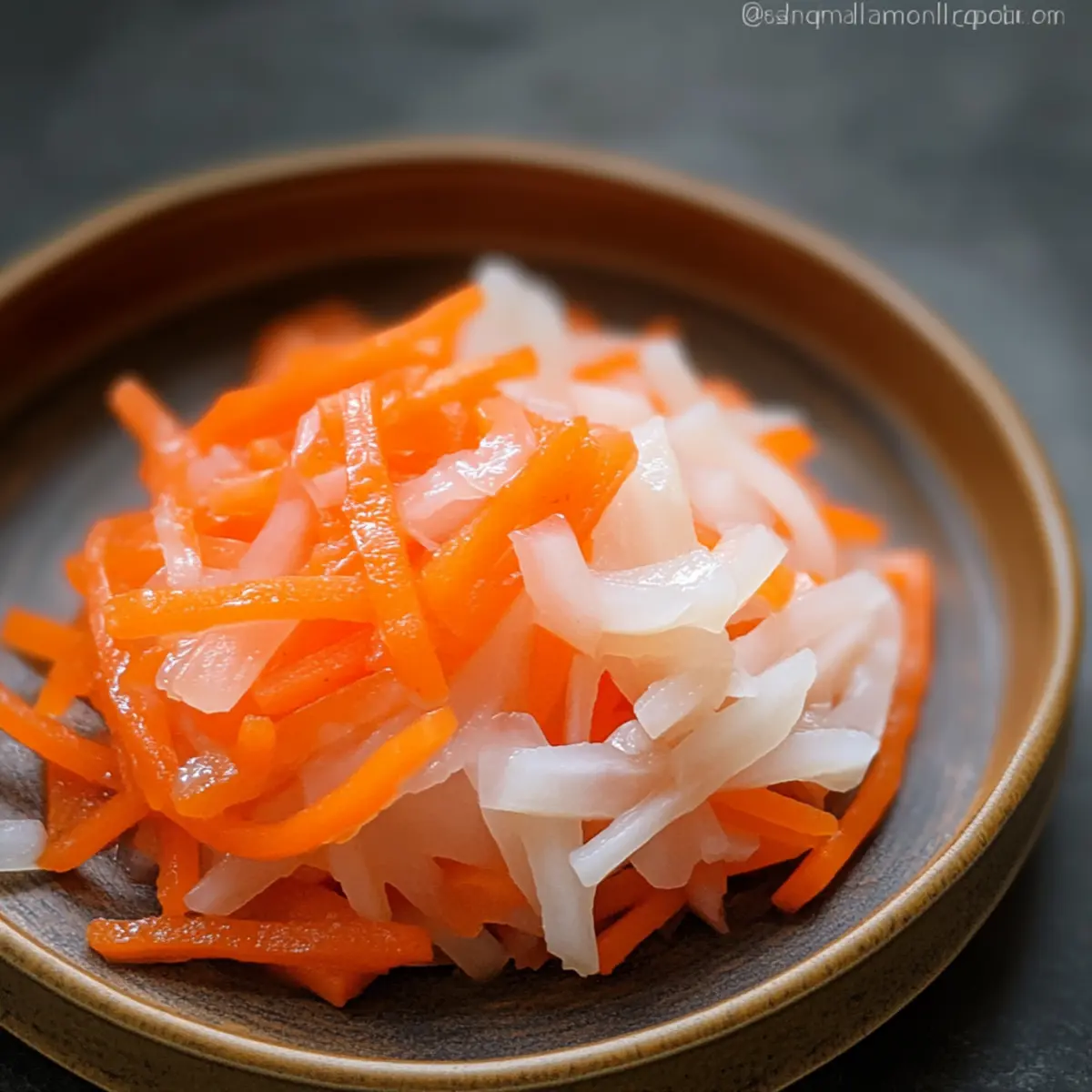
Vietnamese Pickled Vegetables Variations
Feel free to explore and customize these pickled delights to suit your tastebuds and creative flair!
-
Spicy Kick: Add thinly sliced chili peppers to the mix for an extra layer of heat. Whether you prefer mild or fiery, this twist can elevate your pickles from tangy to tantalizing.
-
Different Veggies: Swap in cucumbers or radishes for a refreshing change. Each veggie brings its own unique flavor and texture, allowing you to personalize the dish with whatever is fresh and enticing at your local market!
-
Herb Infusion: Toss in fresh herbs like cilantro or mint for aromatic notes. The bright flavors of herbs can wonderfully complement the tangy pickling liquid, creating a vibrant medley of essential tastes.
-
Fruit Addition: Try incorporating thin slices of mango or pineapple for a sweet twist. This unexpected pairing will give your pickles a tropical vibe that’s both refreshing and delicious.
-
Vinegar Variants: Experiment with different vinegars such as apple cider or rice wine for various flavor profiles. Each vinegar adds its own character, allowing you to find the perfect acidity that suits your dish.
-
Sweetness Swap: Use honey or agave syrup in place of cane sugar for a natural sweetness. This adjustment not only adds unique flavor but can also cater to those seeking a more wholesome option.
-
Fermented Touch: For a probiotic boost, consider fermenting the vegetables for a few days before sealing. This method introduces beneficial bacteria, giving your pickles even more depth and health benefits.
For more on how to elevate your pickling game, check out my guide on quick pickling techniques or dive into the world of fermented foods for even more excitement!
What to Serve with Vietnamese Pickled Daikon Radish and Carrots
Dive into a world of flavors that beautifully complement these zesty pickled delights!
-
Grilled Pork Banh Mi: The savory richness of marinated grilled pork pairs perfectly with the bright crunch of pickled vegetables, creating a symphony of taste.
-
Fresh Spring Rolls: These rice paper rolls filled with shrimp or vegetables contrast the tangy pickles with their soft texture, providing a delightful bite.
-
Noodle Soup (Phở): The aromatic broth and tender noodles enhance the crispiness of pickles, making each spoonful a deliciously balanced experience. Who doesn’t love a refreshing crunch in a warm soup to elevate its flavor?
-
Asian-Inspired Salad: Toss together mixed greens, sesame dressing, and roasted nuts to create a playful salad that harmonizes beautifully with the vibrant pickles.
-
Rice Paper Tacos: Use thin rice paper as a wrapper and stack grilled chicken or tofu with fresh herbs and the pickled vegetables for a fun fusion dish!
-
Sesame-Crusted Tofu: The nutty, crunchy texture of sesame crusted tofu complements the tangy crunch of the pickles while adding protein to your meal.
-
Chilled Sake or Green Tea: A refreshing drink like chilled sake or a fragrant green tea provides an elegant balance to the zesty pickles, enhancing your dining experience.
-
Coconut Chiffon Cake: End your meal with a light and airy dessert that counteracts the pickle’s acidity with its sweet, creamy texture—pure bliss!
Make Ahead Options
These Vietnamese Pickled Vegetables are perfect for meal prep! You can slice and salt the daikon radish and carrots up to 24 hours in advance, allowing them to draw out moisture and enhance their crunch. Store them in an airtight container in the refrigerator during this time. Additionally, you can prepare the pickling liquid and keep it in a separate jar for up to 3 days before combining it with the vegetables. To finish prepping, simply rinse the salted veggies, mix them with the cooled pickling liquid, and let them sit at room temperature for 24 hours before refrigerating. This makes for a flavorful condiment that’s ready to elevate your dishes with minimal effort—just as delicious as making them fresh!
Expert Tips for Vietnamese Pickled Vegetables
-
Uniform Slices: Use a mandolin to slice the daikon radish and carrots into matchsticks for consistent pickling. This helps ensure even texture.
-
Adjust Ratios: Feel free to alter the daikon-to-carrot ratio based on your preference. Traditional recipes tend to favor daikon, but make it your own!
-
Rinse Thoroughly: After salting, rinse the vegetables 2-3 times to remove excess salt, preventing overly salty pickles.
-
Cooling is Key: Make sure the pickling liquid is completely cooled before adding it to the vegetables. This helps maintain their crunch and freshness.
-
Storage: Keep your Vietnamese Pickled Vegetables in an airtight container in the refrigerator. They can last up to two months, just remember to use clean utensils!
Storage Tips for Vietnamese Pickled Vegetables
Fridge: Store your Vietnamese Pickled Vegetables in an airtight container in the refrigerator to keep them fresh and crisp for up to two months.
Room Temperature: Allow the pickles to sit at room temperature for 24 hours after sealing the jar; this helps enhance the flavors before refrigerating.
Reheating: Enjoy them cold straight from the fridge, or add them to your warm dishes without reheating to maintain their delightful crunch and tang.
Submerging: Ensure all vegetables are fully submerged in the pickling liquid — if needed, add a bit more water to keep them submerged for optimal flavor infusion.
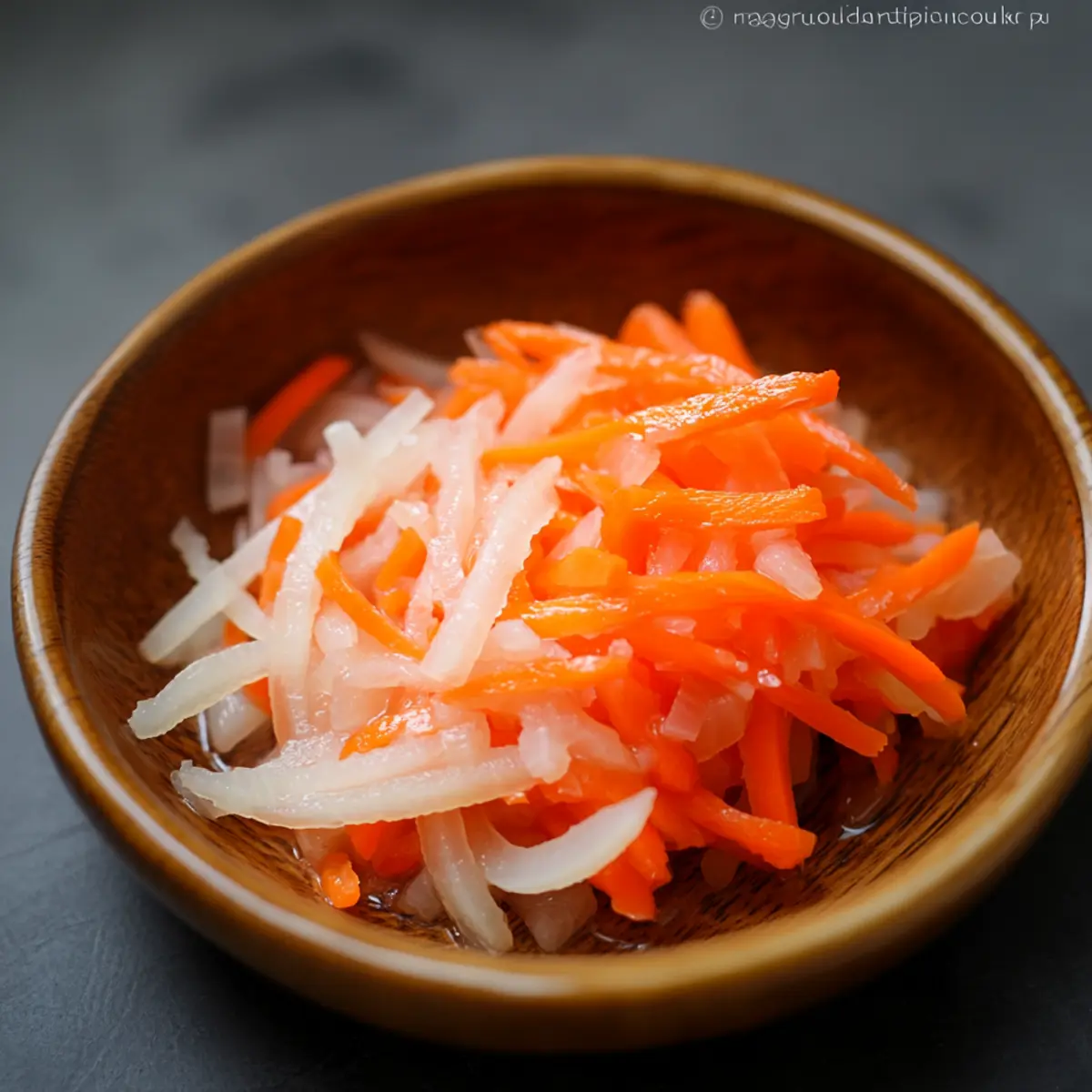
Vietnamese Pickled Vegetables Recipe FAQs
How do I select ripe vegetables for this recipe?
Absolutely! When choosing your daikon radish and carrots, look for firm and smooth specimens. The daikon should be white with minimal dark spots, while carrots should be vibrant in color without soft spots. Freshness impacts the crunch and flavor of your pickles, so trust your senses!
How do I store Vietnamese Pickled Vegetables, and how long do they last?
Very! Store your Vietnamese Pickled Vegetables in an airtight container in the refrigerator. They will keep well for up to two months. Always use clean utensils when serving to maintain their freshness and longevity.
Can I freeze Vietnamese Pickled Vegetables?
While I recommend enjoying them fresh, you can freeze your pickled vegetables for up to 3 months. To do this, place the pickles in a freezer-safe bag or container, ensuring they are submerged in the pickling liquid to prevent freezer burn. When you’re ready to use them, thaw in the refrigerator overnight and enjoy in cooked dishes.
What if my pickles are too salty?
No worries! If your Vietnamese Pickled Vegetables turn out too salty, a simple fix is to soak them in water for about 30 minutes before serving. Rinse and drain them well. This will help draw out excess salt without sacrificing too much flavor.
Are these pickled vegetables suitable for my pets or anyone with allergies?
It’s always best to be cautious! Vietnamese Pickled Vegetables are generally safe for most diets; however, ensure that anyone with vegetable allergies or sensitivities checks individual ingredients. Certain spices or additives, like chili, may not be suitable for pets, so it’s wise to consult your vet before sharing any of your homemade goodies.
Can I customize this recipe further?
Absolutely! One of the best parts about Vietnamese Pickled Vegetables is the customization. Feel free to adjust the ratio of daikon to carrots based on your preference, or even experiment with substitute veggies like cucumbers or green onions. For a spicy kick, adding slices of chili pepper can awaken these zesty treats even more!
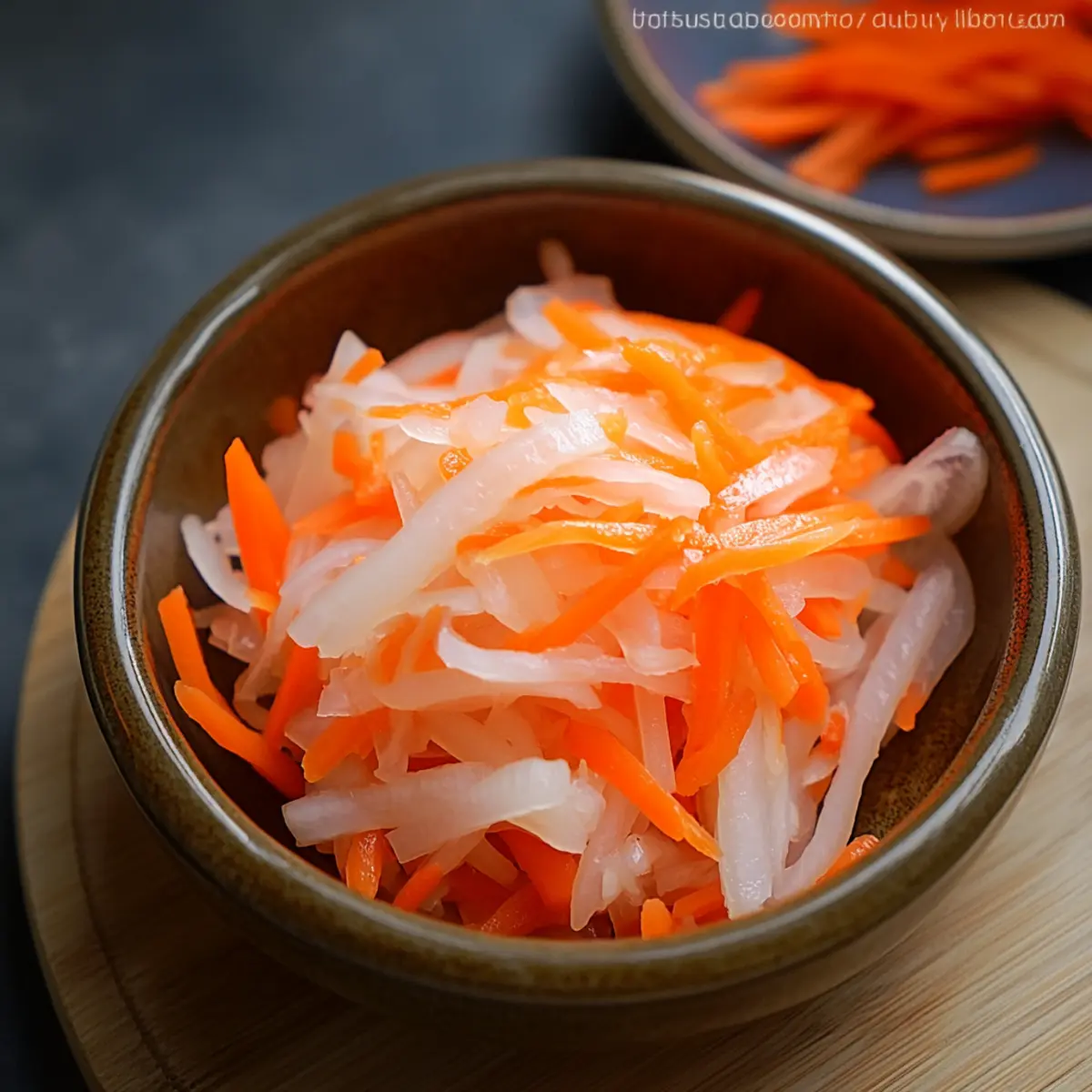
Crispy Vietnamese Pickled Vegetables for a Zesty Touch
Ingredients
Equipment
Method
- Prepare the vegetables by peeling and slicing daikon radish and carrots into matchsticks. Sprinkle a heaping tablespoon of salt and mix well. Let sit for about 30 minutes.
- After 30 minutes, rinse the salted vegetables under cold water 2-3 times to remove excess salt. Squeeze to drain remaining liquid.
- Make the pickling liquid by boiling a cup of water, dissolving a quarter cup of cane sugar in it. Add a cup of vinegar and let cool completely.
- Combine the drained vegetables in a sterilized glass jar. Pour cooled pickling liquid over them, ensuring they are fully submerged.
- Seal the jar tightly, shake gently, and let it sit at room temperature for 24 hours before refrigerating.
Leave a Reply