
There’s something magical about a simmering pot of ragu on a chilly evening, isn’t there? As the rich aromas waft through the kitchen, they herald the arrival of my favorite comfort food: Braised Pork Ragu Pappardelle. This dish combines succulent pieces of pork shoulder, slow-braised to perfection in a luscious red wine and tomato sauce, oh-so-satisfyingly enveloping wide pappardelle pasta. Not only is this meal a showstopper for gatherings, but it’s also a quick triumph in the kitchen, as you can choose your preferred cooking method—stovetop, slow cooker, or even the Instant Pot. You’ll be amazed at how this wholesome, high-protein dish brings warmth to both your plate and heart. Are you ready to dive into a bowl of pure Italian comfort?
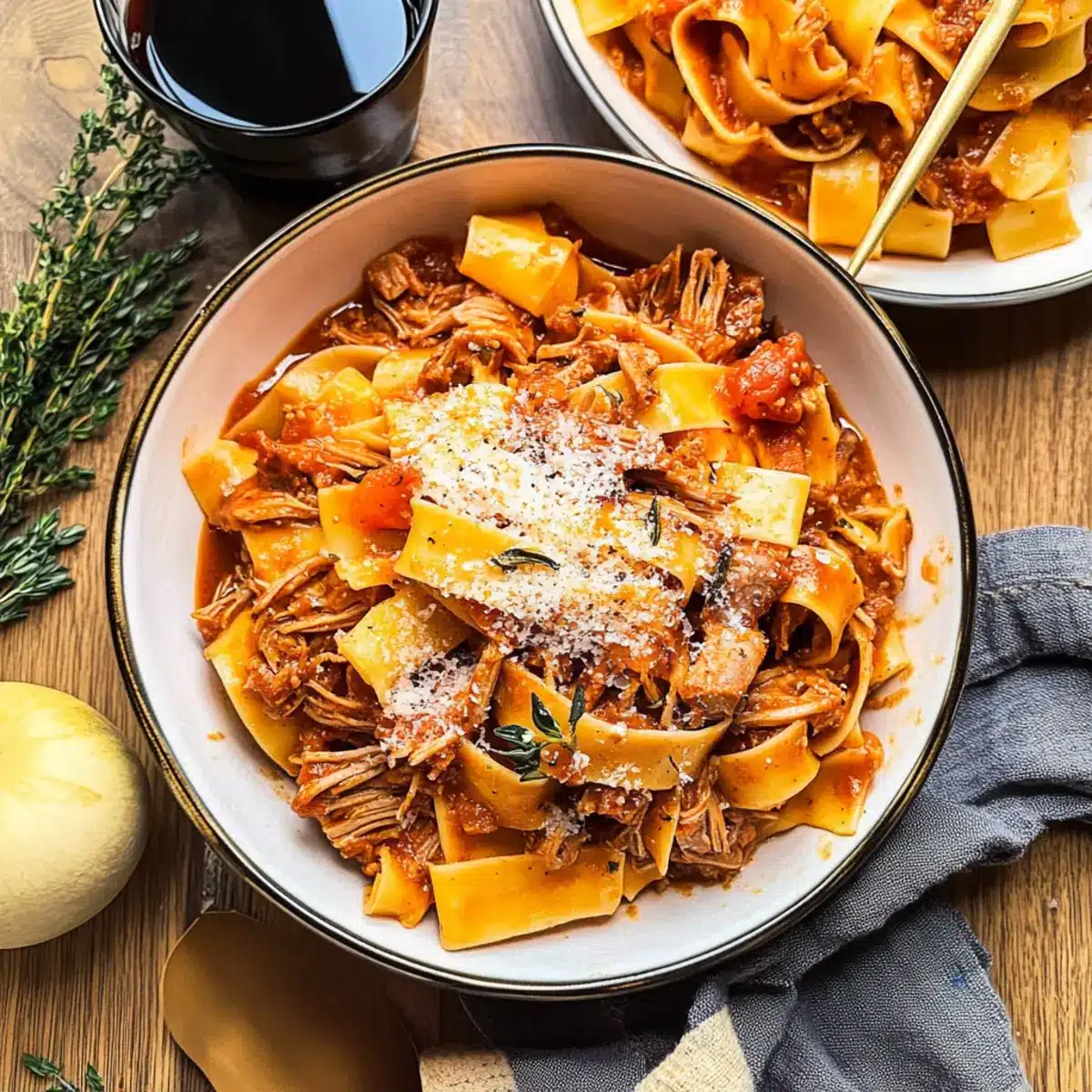
Why is Braised Pork Ragu Pappardelle Unforgettable?
Comfort at Its Best: This recipe is a true hug in a bowl, making it perfect for cozy nights or entertaining loved ones.
Flavorful Layers: The slow-braised pork shoulder simmers in a rich sauce, creating a depth of flavor that rivals any Italian restaurant dish.
Versatile Cooking Methods: Whether you’re using a Dutch oven, slow cooker, or Instant Pot, you can tailor this dish to fit your schedule.
High-Protein Delight: Packed with protein, this dish not only satisfies the taste buds but also keeps you feeling full and energized.
Impressive Presentation: Serve it garnished with freshly grated Parmesan, and you’ll impress guests with a dish that looks as good as it tastes!
If you’re seeking more comfort food ideas, check out our guide on hearty pasta dishes that will tantalize your taste buds!
Braised Pork Ragu Pappardelle Ingredients
• Create an unforgettable dish with these essential ingredients.
For the Ragu
- Boneless Pork Shoulder – The main protein source, cut into large pieces for optimal juiciness.
- Salt and Pepper – Enhances the savory flavors of the pork and vegetables.
- Olive Oil – Perfect for browning the pork, imparting a rich flavor to the ragu.
- Onion – Provides a savory base; diced for even cooking and a melting texture.
- Carrots – Adds a natural sweetness and depth to the sauce; peeled and diced for consistency.
- Celery – Contributes a lovely freshness and flavor; also diced for even sautéing.
- Garlic – Infuses the dish with aromatic goodness; minced to release flavor effectively.
- Fresh Thyme, Rosemary, Sage – Aromatic herbs that enhance the earthy flavors of the dish; sprigs are used for aroma.
- Tomato Paste – Adds concentrated tomato flavor; darkens and thickens the wonderful sauce.
- Red Wine – De-glazes the pot to add acidity and depth; a key ingredient must be reduced for flavor.
- Crushed Tomatoes (canned) – Acts as the main component for the sauce; creates a rich, comforting base.
- Chicken Stock – Adds moisture and depth, enriching the overall taste.
- Heavy Cream – Enriches the sauce to make it luscious and silky; adjust to your preference.
For the Pappardelle
- Pappardelle Pasta – The wide pasta that beautifully holds the rich sauce; cooked until al dente.
For Garnishing
- Parmesan Cheese – Freshly grated for enhanced flavor; a perfect finish to this dish.
- Fresh Thyme (Optional) – Adds a touch of elegance and freshness when garnishing.
Dive into the warmth of Braised Pork Ragu Pappardelle and discover the magic of home-cooked Italian comfort food!
Step‑by‑Step Instructions for Braised Pork Ragu Pappardelle
Step 1: Preheat and Prepare
Begin by preheating your oven to 325°F (163°C) to ensure it’s at the right temperature for braising. While the oven heats, generously season the boneless pork shoulder pieces with salt and pepper. This not only enhances the flavor but also helps with browning, creating a deeper taste in your Braised Pork Ragu Pappardelle.
Step 2: Brown the Pork
In a large Dutch oven, heat a couple of tablespoons of olive oil over high heat. Once the oil is shimmering, carefully add the seasoned pork shoulder pieces, browning them on all sides for about 7 minutes per batch. This step is essential to develop those rich, caramelized flavors that will elevate your ragu. Remove the browned pork and set it aside on a plate.
Step 3: Sauté the Vegetables
Using the same pot, lower the heat to medium and add the diced onions, carrots, and celery to the rendered fat. Sauté these vegetables for about 5 minutes, stirring frequently, until the onions become translucent, releasing their wonderful aromas. This mixture forms a savory base for your Braised Pork Ragu Pappardelle.
Step 4: Add Aromatics
Next, introduce the minced garlic and fresh herb sprigs (thyme, rosemary, and sage) to the pot. Stir them in and cook for an additional 2 minutes until fragrant. The combination of garlic and herbs creates a wonderful depth of flavor that will beautifully complement the pork in the ragu.
Step 5: Cook Tomato Paste
Stir in the tomato paste, allowing it to cook for about 1 minute. As the tomato paste darkens, it will develop a caramelized flavor that brings richness to your sauce. This critical step will deepen the taste of the final dish, making your Braised Pork Ragu Pappardelle unforgettable.
Step 6: Deglaze with Wine
Pour in a generous splash of red wine to deglaze the pot, scraping up any browned bits stuck to the bottom. Let the wine cook for about 5 minutes, allowing the alcohol to evaporate and the flavors to intensify. This adds a beautiful acidity to the sauce, enhancing the overall profile of the ragu.
Step 7: Combine the Sauce Ingredients
Now, add in the crushed tomatoes and chicken stock, mixing everything until well combined. Bring this mixture to a gentle simmer, allowing the flavors to meld together beautifully. This base is going to be the heart of your Braised Pork Ragu Pappardelle, so stir well and prepare for the next step.
Step 8: Braise the Pork
Return the browned pork shoulder along with any accumulated juices back to the pot. Cover the Dutch oven with a lid and transfer it to the preheated oven. Braise for 3 to 3.5 hours, checking for tenderness; the pork should easily shred with a fork when done. This slow cooking process infuses every bite with the rich essence of the ragu.
Step 9: Cook the Pasta
While the pork is braising, cook the pappardelle pasta according to package instructions, ensuring it remains al dente. Reserve 1 to 2 cups of the pasta water before draining. The starchy water can help fine-tune the sauce’s consistency later, making every plate of your Braised Pork Ragu Pappardelle delightfully coated.
Step 10: Shred the Pork
Once the pork is tender and ready, carefully remove it from the pot and shred it to your desired texture. If the ragu seems too thick, you can stir in some reserved pasta water to achieve a velvety sauce. This step ensures that every piece of pork and pasta is enveloped in that delicious ragu.
Step 11: Enrich the Sauce
To finish the sauce, stir in the heavy cream, adjusting the amount to create your preferred level of creaminess. Mix everything thoroughly; the cream adds a luxurious touch, enhancing the richness of your Braised Pork Ragu Pappardelle and bringing it all together.
Step 12: Toss and Serve
Toss the cooked pappardelle gently into the sauce until the pasta is well-coated in the luscious ragu. Plate your beautifully sauced noodles and serve hot, garnishing with freshly grated Parmesan cheese and a sprinkle of fresh thyme if desired. Enjoy the cozy comfort of this dish!
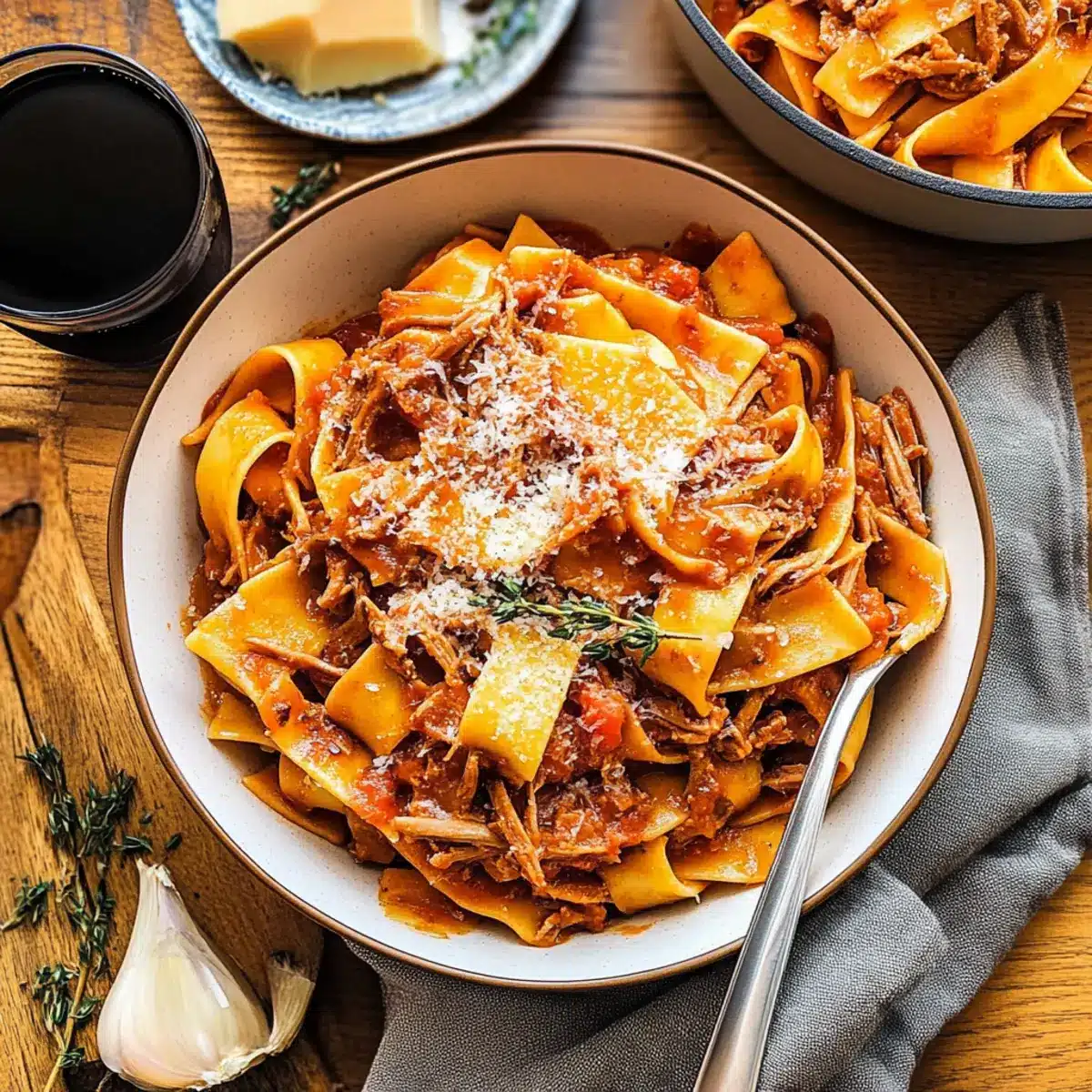
Braised Pork Ragu Pappardelle Variations & Substitutions
Feel free to explore these creative twists on the classic recipe and make it your own!
-
Pasta Swap: Use fettuccine or tagliatelle instead of pappardelle for a different shape and texture; both pair beautifully with the rich ragu.
-
Alternative Protein: Try using beef or veal instead of pork for a unique flavor; simmering times may vary, so check tenderness.
-
Lighten It Up: Serve the ragu over creamy polenta or mashed potatoes instead of pasta for a delicious twist; it adds a delightful creaminess.
-
Vegetarian Option: Substitute the meat with mushrooms like portobello or cremini; let them brown well to develop a hearty flavor before adding sauce ingredients.
-
Extra Flavor: Stir in a dash of balsamic vinegar or ** Worcestershire sauce** for an added depth of flavor; it brightens up the ragu beautifully!
-
Spice Things Up: Add a pinch of red pepper flakes to bring a kick to the sauce; this small swap can elevate the dish to new spicy heights.
-
Herbal Freshness: Use fresh basil or oregano along with or instead of thyme and rosemary; the fresh herbs bring a delightful brightness to the ragu.
-
Creamy Variants: For a lighter version, substitute heavy cream with Greek yogurt or cottage cheese blended until smooth; it’s a delicious way to cut calories while keeping the creamy texture.
Embrace the magic of personalization; whether you’re experimenting with flavors or catering to dietary needs, don’t hesitate to adjust your dish! If you’re looking for more hearty ideas, check out our hearty pasta dishes that nourish both body and soul.
What to Serve with Braised Pork Ragu Pappardelle?
Pairing the perfect sides can elevate your Italian feast into something truly memorable.
-
Garlic Bread: The buttery, toasted goodness is perfect for mopping up that luscious ragu sauce.
-
Fresh Spinach Salad: A refreshing, crisp salad with a tangy vinaigrette balances the richness of the dish beautifully.
-
Roasted Vegetables: Seasonal vegetables roasted to caramelized perfection add a sweet contrast and interesting texture to your plate.
-
Creamy Polenta: Silky polenta serves as a luxurious base that pairs well with the rich ragu for a comforting twist.
-
Red Wine: A glass of Chianti or a similar robust red enhances the flavors, echoing the wine in your ragu.
-
Tiramisu: Finish your meal with this classic Italian dessert for a sweet, creamy finish that leaves everyone satisfied.
These delightful pairings will create a harmonious dining experience, complementing the comforting richness of Braised Pork Ragu Pappardelle.
Expert Tips for Braised Pork Ragu Pappardelle
-
Avoid Overcrowding: When browning the pork, ensure you don’t overcrowd the pot. This will help achieve that delicious sear and prevent the meat from becoming tough.
-
Proper Deglazing: Don’t skip the deglazing step with red wine; it not only enhances flavor but also helps lift those caramelized bits from the bottom of the pot, adding depth to your Braised Pork Ragu Pappardelle.
-
Pasta Water Magic: Save some pasta water before draining. This starchy water can be used to adjust the sauce’s consistency later, ensuring it clings beautifully to your pappardelle.
-
Cream to Taste: Adjust the amount of heavy cream according to your preference for richness in the sauce. Start small, and increase gradually until you achieve the desired creaminess.
-
Presentation Matters: For an elegant touch, garnish your dish with freshly grated Parmesan and a sprinkle of fresh thyme, turning your homemade ragu into an impressive meal!
How to Store and Freeze Braised Pork Ragu Pappardelle
Fridge: Store the Braised Pork Ragu in an airtight container for up to 5 days. Make sure it’s cooled to room temperature before sealing to maintain freshness.
Freezer: For longer storage, freeze the ragu in airtight containers for up to 3 months. Ensure it’s fully cooled, then portion it out for easy defrosting later.
Reheating: When ready to enjoy, gently reheat the ragu on the stovetop over low heat, adding a splash of water or chicken stock to loosen the sauce if needed. This ensures a deliciously warm and flavorful dish every time!
Pasta Storage: If you’ve made extra pasta, store it separately in the fridge for up to 3 days. Mix it with a bit of olive oil to prevent sticking.
Make Ahead Options
Braised Pork Ragu Pappardelle is perfect for meal prep, helping you save time on busy weeknights! You can prep the ragu up to 3 days in advance by cooking it through Step 8 and refrigerating it. When ready to serve, simply reheat the ragu on the stovetop, replenishing with some reserved pasta water for the best consistency. You can also cook the pappardelle pasta up to 24 hours ahead, storing it in the refrigerator and tossing it with a bit of olive oil to prevent sticking. When it’s time to enjoy your meal, just combine the ragu with freshly cooked pasta and finish with heavy cream for that luscious, restaurant-quality sauce. With these make-ahead tips, you’ll have an exquisite Italian dinner ready with minimal effort and stress!
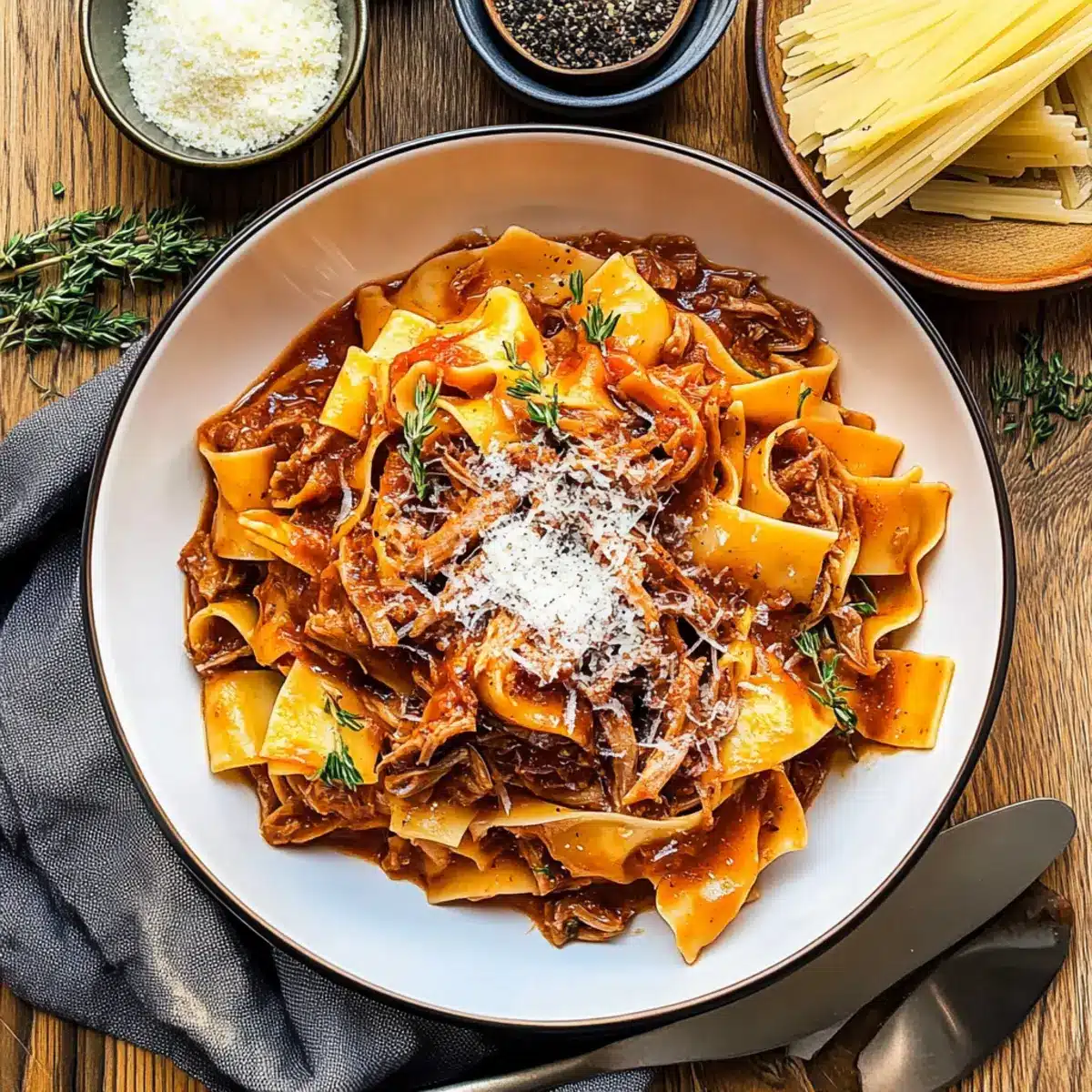
Braised Pork Ragu Pappardelle Recipe FAQs
How do I choose the right pork shoulder for this recipe?
Absolutely! When selecting a boneless pork shoulder, look for a cut with a good amount of marbling. This fat will melt during cooking, keeping the meat juicy and flavorful. It should feel slightly firm but not hard, and the color should be a bright pink to red without any dark spots. Freshness is key to achieving that melt-in-your-mouth texture!
How should I store leftover Braised Pork Ragu Pappardelle?
Store any leftovers in an airtight container in the fridge for up to 5 days. Allow the ragu to cool to room temperature before sealing it—this helps maintain freshness. Just be sure to use it up within that timeframe to enjoy all its delightful flavors!
Can I freeze Braised Pork Ragu? If so, how?
Yes, you can definitely freeze your ragu! Once it’s cooled completely, portion it into airtight containers or freezer bags and store it for up to 3 months. When you’re ready to enjoy it again, simply thaw it in the refrigerator overnight and reheat gently on the stovetop, perhaps with a splash of water or stock to loosen it if needed.
Why is my ragu too thick or too thin? How can I fix it?
Very good question! If your ragu turns out too thick, you can add a bit of the reserved pasta water or more chicken stock while simmering to loosen it up. For a ragu that’s too thin, let it simmer uncovered on low heat for a bit longer to reduce and thicken the sauce. Remember, the more it simmers, the more flavor develops!
Is this recipe suitable for gluten-free diets?
Yes, you can easily adapt this dish for gluten-free diets! Simply substitute the pappardelle with gluten-free pasta options made from rice, corn, or quinoa. Just make sure to check the cooking time on the package, as it may differ from traditional pasta. Enjoy your delicious, comforting meal without the gluten!
Can I use a different type of meat in this ragu?
The more the merrier! While pork shoulder is delightful, you can certainly try using beef chuck or even veal for different flavor profiles. Just ensure you adjust cooking times accordingly, as different meats may require varying amounts of braising to achieve that tender, fork-shredded consistency. Enjoy experimenting!
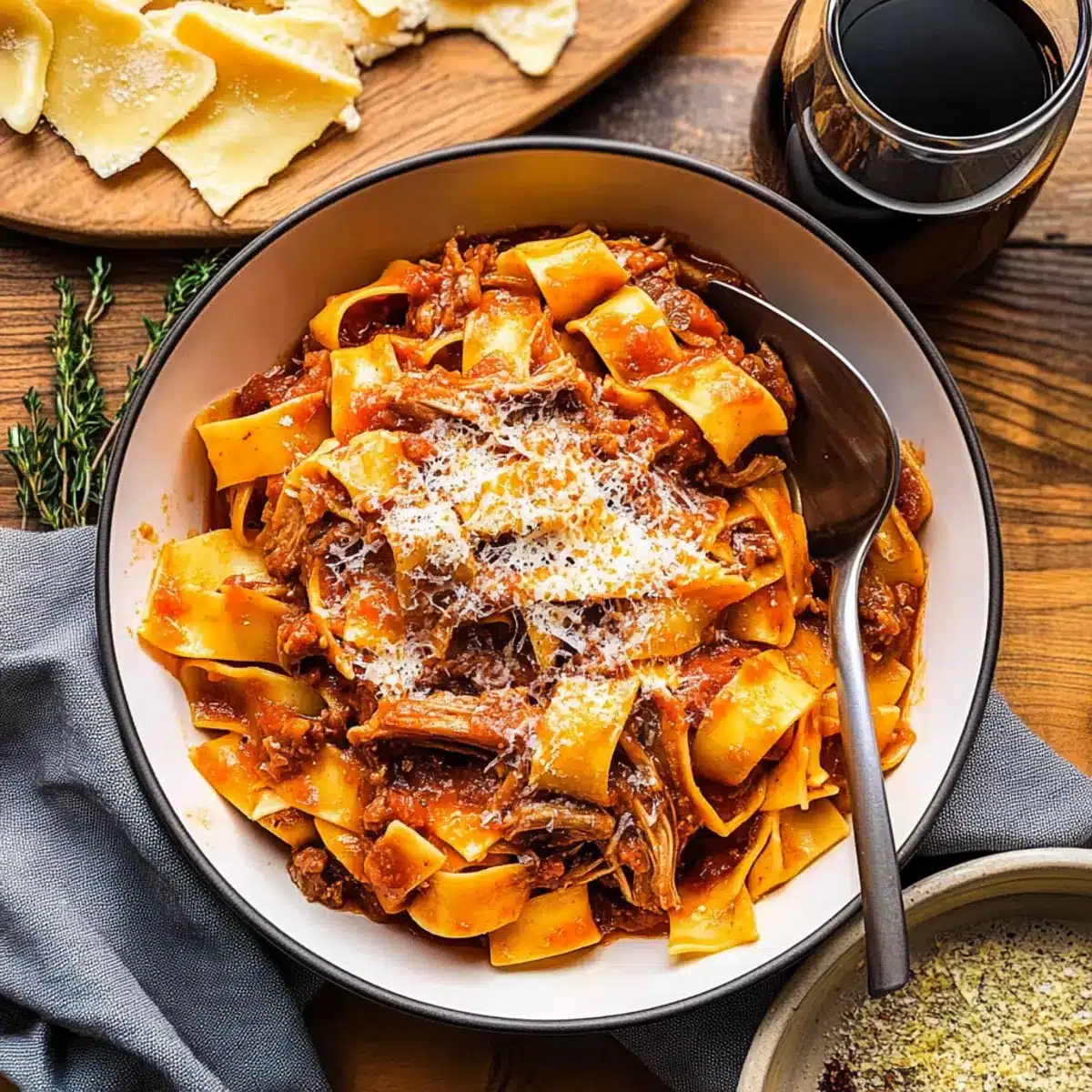
Braised Pork Ragu Pappardelle: An Italian Cozy Classic
Ingredients
Equipment
Method
- Preheat your oven to 325°F (163°C). Season the boneless pork shoulder pieces with salt and pepper.
- In a large Dutch oven, heat olive oil over high heat. Add the pork shoulder pieces and brown them on all sides for about 7 minutes.
- Lower the heat to medium and add diced onions, carrots, and celery to the pot. Sauté for about 5 minutes until onions are translucent.
- Add minced garlic and fresh herb sprigs (thyme, rosemary, and sage) to the pot, cooking for an additional 2 minutes until fragrant.
- Stir in the tomato paste and cook for about 1 minute until it darkens.
- Pour in red wine to deglaze the pot, scraping up browned bits, and let cook for about 5 minutes.
- Add crushed tomatoes and chicken stock, mixing everything until well combined. Bring to a gentle simmer.
- Return the browned pork to the pot, cover, and braise in the oven for 3 to 3.5 hours.
- While the pork is braising, cook the pappardelle according to package instructions and reserve 1 to 2 cups of pasta water.
- Once the pork is tender, shred it and stir in reserved pasta water if the ragu is too thick.
- Stir in the heavy cream to achieve desired creaminess.
- Toss the cooked pappardelle with the sauce until well-coated and serve hot, garnished with Parmesan cheese and fresh thyme.
Leave a Reply